New - 30 Mins Ago

$495,000
Active
3
Beds
3
Baths
1568
Sqft
0.19
Acres
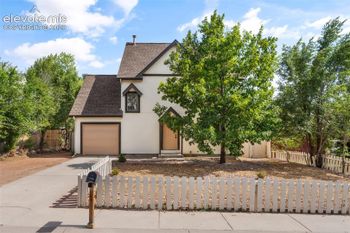
1988 Thundercloud Dr, Windsor, CO 80550
MLS#: IR1071216




Why buy a home in Colorado instead of renting? Ten reasons hold up: you build equity, you own a share of long-term price growth, your payment stays steady, you can deduct mortgage interest and property tax if you itemize, you can change the house, you put down roots, you can borrow against your equity, you can pass the home on, your pets and hobbies get room, and the house is yours. Each reason comes with a Colorado rule, a number or a cost to check. This guide gives all three, so you can decide if buying in the Denver metro or on the Front Range fits you.
Questions? Call or text 303-955-4220. A live person answers at The Kenna Group at Keller Williams DTC.
The short answer
Buying beats renting when you stay long enough for equity and price growth to cover the costs of buying. Our rent or buy report puts that break-even at 8.6 to 9.8 years at full price, and 6.2 to 7 years with a 3% seller credit and a rate buydown. Every reason below is real and every reason has a cost. Both are listed.
The Denver Metro Association of REALTORS reported 4.76 months of inventory across all Denver metro homes at the end of September 2026 and 7.21 months for condos and townhomes. The Colorado Association of REALTORS found that 80% of Denver metro sales in September came with a price cut or a seller concession. Freddie Mac put the 30-year fixed rate at 7.40% for the week ending October 15, 2026. In plain words: sellers are negotiating, rates are high, and a buyer who asks for a credit or a rate buydown gets answers. See the September 2026 price cuts report, should you buy now or wait and today's Colorado mortgage rates. Check your own budget with can I afford a home now and the affordable homes in Colorado guide. Live city numbers sit in the Denver metro market reports and the Kenna News Desk.
Find your number, then jump to that section.
| # | Reason | The Colorado detail | First step |
|---|---|---|---|
| 1 | Build equity | Each payment pays down the loan | See the $400,000 loan chart below |
| 2 | Long-term price growth | Denver metro median rose from $382,000 to $615,000, May 2017 to May 2026 | Plan to stay 7 years or more |
| 3 | Steady payment | Principal and interest stay fixed; tax and insurance change | Ask for the full monthly payment |
| 4 | Tax advantages | Itemizers deduct interest and property tax | Ask your tax advisor |
| 5 | Freedom to change the house | Colorado limits HOA bans on solar and drought-tolerant yards | Read the covenants before you offer |
| 6 | Put down roots | District boundaries, HOA life, choice enrollment | Check the boundary for each address |
| 7 | Access to equity | HELOC or cash-out refinance, each with a cost | Compare the rate and the closing costs |
| 8 | Generational wealth | Beneficiary deed or trust; no Colorado estate tax | Talk to an estate attorney |
| 9 | Pets and lifestyle | Colorado caps renter pet fees; owners face HOA pet rules | Read the pet rules before you write |
| 10 | Pride of ownership | Hail, maintenance and insurance are yours | Set aside 1% of the price each year |
Rent is gone when you pay it. A mortgage payment splits into interest and principal, and the principal part becomes yours. On a $400,000 loan at 7.40% for 30 years, the payment is $2,769.52 a month for principal and interest. Year one pays off $3,760 of the loan. Year ten pays off $7,304. Fifteen years in, you have paid off $99,403.
Principal you pay off on a $400,000 loan at 7.40%, 30-year fixed (payment $2,769.52 a month)
The early years are mostly interest. That is why the first five years matter and why a sale in year two does not cover the costs of buying and selling.
Check first: how long you plan to stay and what the home must cost to sell. Run your own numbers in the Colorado mortgage calculator and read closing costs in Colorado.
How we help: we price the home against its real sales so you do not pay for equity you do not get. Start with the first-time buyer guide and the home buyer's guide. Selling a home first? Read 10 reasons Coloradans sell their homes and see the home valuation page.
The Denver metro median price was $382,000 in May 2017 and $615,000 in May 2026, a rise of 61% in nine years, or 5.4% a year on average. The line was not straight. The year-to-date median for detached homes was $650,000 in September 2026, the same as the same stretch of each of the previous two years.
Denver metro median home price, all property types
Check first: growth is a result, not a promise. Ask for the sold prices on your block and in your subdivision for the last five years, not a metro average. Condos and townhomes behaved differently from detached homes: the median closing price for condos and townhomes in the Denver metro fell 6.28% year over year to $365,500 in September 2026.
How we help: we pull the sold history for any address, then show you the sale prices behind it. See the live Denver real estate statistics and our Denver metro market reports.
A fixed-rate mortgage locks principal and interest for 30 years. Rent changes at every renewal. That is the single biggest planning advantage of owning.
Watch out: the fixed part is principal and interest only. Property tax, homeowners insurance and HOA dues change. Colorado counties reappraise homes every two years, in odd-numbered years, and 2027 is the next one. Ask for the full payment with tax, insurance and dues before you write an offer. Read the Denver property taxes guide and the special districts guide: a metro district adds its own tax on top of the county bill.
How we help: we run the full monthly number on every home you tour. If the rate is the problem, see the 3-2-1 buydown program, assumable mortgage homes and what half a point costs a month.
Homeowners who itemize deduct mortgage interest, on up to $750,000 of loan balance, and property tax, within the federal cap on state and local taxes. Homeowners who take the standard deduction get no extra deduction from owning. That is the whole picture, and it changes by household.
Check first: add your mortgage interest, property tax, state tax and gifts to charity. If the total is below your standard deduction, the tax benefit is zero. Ask your tax advisor to run both ways with your numbers before you count it as a reason to buy. We do not give tax advice.
How we help: we give your tax advisor the numbers: loan amount, rate, estimated tax and insurance. See the Colorado mortgage calculator.
A renter asks permission. An owner picks the paint, the garden, the fence and the kitchen. In Colorado, state law also limits what an HOA can ban: solar panels and drought-tolerant landscaping are protected, and a retractable clothesline counts as an energy efficiency measure. An HOA can still set design rules on placement, size and appearance.
Watch out: an HOA can require approval for exterior paint, fences, sheds and additions. Read the covenants and the rules before you offer, not after. Condos share walls and roofs, so you change the inside only. See the HOA fees guide and understanding HOA covenants.
How we help: we pull the HOA documents before you commit and flag any rule that blocks what you plan to do. For homes with no HOA, search new construction by area or the live grid below.
Owning lets you stay. You choose the street, the block, the HOA and the recreation center, and nobody sells the building out from under you.
Check first: school boundaries. Find the district for each address on the district's own lookup, because boundaries move. Colorado districts also run choice enrollment programs with their own deadlines, so ask the district how it works for your address. We do not rank neighborhoods by who lives there, and we do not rate schools. Fair housing law bars both. We show homes, prices, HOA budgets and district tax bills.
How we help: start with Denver neighborhoods, the Denver metro explorer and moving to Denver. See the city pages for Littleton, Highlands Ranch, Parker, Castle Rock, Arvada and Lakewood.
Equity is also a tool. A home equity line of credit (HELOC) lets you borrow against it as needed. A cash-out refinance replaces your first mortgage with a larger one and hands you the difference in cash.
Watch out: a cash-out refinance replaces your first-mortgage rate with today's rate. If your rate is below 7.40%, a HELOC leaves the first mortgage alone. A HELOC rate can move, and the home is the collateral for both. Each lender sets its own combined loan-to-value limit, closing costs and waiting period. Ask each lender for those three numbers in writing.
How we help: we compare the payoff of a sale, a HELOC and a refinance. Read refinancing a Colorado home and what your home equity is worth.
A home can pass to the next generation. In Colorado it passes by will and probate, by a living trust, or by a recorded beneficiary deed that names who gets it at your death. Colorado does not have its own estate or inheritance tax, and federal estate tax rules can apply to very large estates.
Check first: how you hold title and who is named. A beneficiary deed skips probate but not creditors, and a trust needs the home retitled into it. Heirs also face a property tax bill and a decision to keep or sell. Talk to an estate attorney and a tax advisor. We cover the sale side in selling a parent's house in Colorado and buying a home for a parent.
How we help: we sell or buy the home at either end of the transfer. See the inherited home checklist.
Renters pay pet deposits and pet rent. Colorado caps both: a $300 refundable pet deposit and monthly pet rent of 1.5% of rent or $35, whichever is greater, and insurers cannot deny a homeowner policy only because of a dog's breed. Owners skip landlord pet rules and add a fence, a dog door, a garage for skis and bikes or a garden for the dog to dig in.
Watch out: an HOA can still set pet rules: number, size and where they go. Read them first. Check the fence height and the yard if the dog is big. Read dog-friendly homes in Colorado and 5 steps to make your backyard dog-friendly.
How we help: tell us the pet, the sport and the storage you need and we filter the live homes to match. For trail and park access, see Highlands Ranch homes near trails and homes near parks and open space.
The first time you hang your own art, plant your own tree or hand someone the key to your own front door, you know the difference. That pride comes with jobs: Colorado hail damages roofs, and the repair, the deductible and the insurance premium are yours.
Plan for it: set aside 1% of the home's price each year for repairs. On a $500,000 home that is $5,000 a year. Order a radon test with every inspection: radon is a known problem in Colorado soil, and a fix is cheaper when you negotiate it before closing. Ask the insurer for the hail deductible in writing. See Colorado hail-resistant roof grants.
How we help: we walk the home with you and flag the roof, the grading, the furnace age and the electrical panel before you waive anything.
Two programs anchor Colorado down payment help. CHFA down payment assistance comes with a CHFA first mortgage and takes the form of a grant, which you never repay, or a second mortgage, which you repay. metroDPA is a 0% interest deferred second mortgage, and it is NOT forgiven. You repay it when you sell, refinance or pay off the first loan. Both programs require a homebuyer education course, and both set a minimum credit score and income limits. A score of 620 or higher is the starting line for the assistance programs.
Before you apply
Know your credit score and your income first. A lender can tell you in one call which program fits and what you repay. You are never required to use a lender we mention. Start with mortgage pre-approval, then see the financing options and credit care if your score needs work.
Eight mistakes we see in Colorado
Ten reasons, one question. Tell us which number is yours. We will show you what you can afford, which program fits, and the homes that match. Call or text 303-955-4220. A live person answers. Not a robot, not a phone tree.






Buying builds equity, locks principal and interest for the life of the loan, lets you change the house, and gives you a share of long-term price growth. Renting costs less up front and moves faster. Our rent or buy report puts the break-even at 8.6 to 9.8 years at full price, and 6.2 to 7 years with a 3% seller credit and a rate buydown.
Buy if you plan to stay at least seven years and have the down payment and reserves. Rent if you expect to move within five years or if closing would leave you with less than three months of payments in the bank. The deciding numbers are your stay, your rate and your closing costs, not the headline price.
Inventory is high: 4.76 months across the Denver metro and 7.21 months for condos and townhomes in September 2026, and 80% of Denver metro sales came with a price cut or a concession. Rates are high too, at 7.40% in mid-October. Buyers can negotiate a credit or a buydown now that was not available in tighter markets.
Yes. On a $400,000 loan at 7.40% for 30 years, you pay off $3,760 of principal in year one, $21,908 after five years, $53,589 after ten and $99,403 after fifteen. Price changes add to or subtract from that number.
If you itemize, you deduct mortgage interest on up to $750,000 of loan balance and property tax, within the federal cap on state and local taxes. If you take the standard deduction, owning adds no deduction. Ask your tax advisor to run both ways with your numbers.
CHFA offers a grant and a second mortgage with a CHFA first mortgage. metroDPA offers a 0% interest deferred second mortgage. Both require a homebuyer education course, a minimum credit score and income limits. Ask an approved lender which one fits you.
No. metroDPA is a 0% interest deferred second mortgage that you repay when you sell, refinance or pay off the first mortgage. It is not forgiven over time.
The program requirements are a homebuyer education course, a credit score of 620 or higher, income under the county limit, and a first mortgage from a participating lender. FHA loans allow a lower down payment with a 580 score. A lender can confirm your numbers in one call.
A HELOC is a second loan that you borrow from as needed, and the first mortgage stays in place. A cash-out refinance replaces the first mortgage with a larger one and pays you the difference. If your current rate is lower than today's 7.40%, a HELOC keeps that rate on the first loan.
An HOA can require approval for paint, fences, sheds and additions. Colorado law limits what an HOA can ban: solar panels and drought-tolerant landscaping are protected, with design rules allowed on placement and appearance. Read the covenants and rules before you write an offer.
Yes, with the HOA's pet rules in hand. An HOA can limit the number, size and location of pets. A house with no HOA, a fenced yard and a gate fits a large dog. Insurers in Colorado cannot deny a homeowner policy based only on a dog's breed.
Read next
Selling a home too? Read Reasons to Sell Your Colorado Home: 10 Real Motivations. Wondering what your current home is worth? See the home valuation page and the Smart Pricing Report.
This is general information, not legal, tax or financial advice. Talk to your lender, a tax advisor or an attorney about your own situation. Program terms change, so confirm the current terms with CHFA, metroDPA or an approved lender. The Kenna Group is a group of licensed Colorado real estate agents at Keller Williams Realty DTC, LLC, the brokerage on every listing and closing. See the brokerage disclosure. Equal Housing Opportunity.